All Language Resources
A language-learning review site I built to 100,000 monthly readers, then sold for about $960,000.
What it became
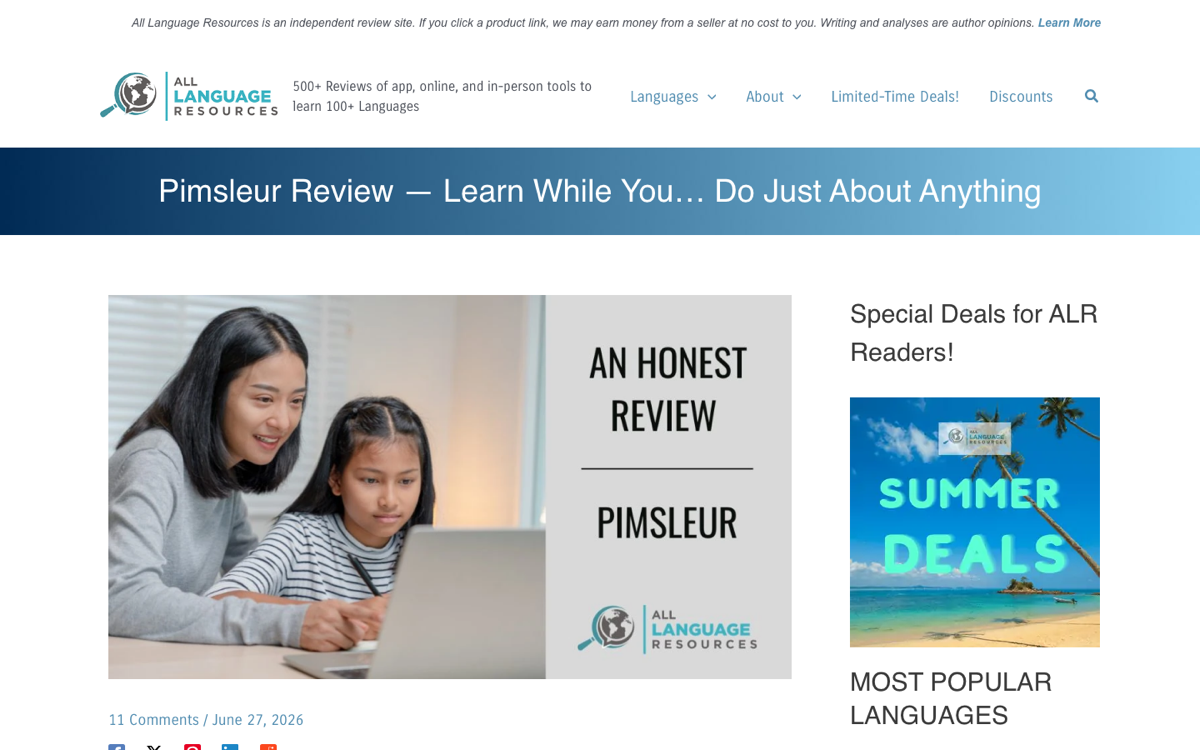
All Language Resources was an affiliate review site for language apps and courses. I built it from nothing to more than 100,000 readers a month over five years, all from search, and sold it in late 2021 for about $960,000. Revenue at the sale was around $350,000 a year. That was revenue, not profit, and I would have had to grind for years to match the sale price in earnings, so I took the exit.
I ran it solo at first and grew into a team of six regular contributors: writers, an SEO specialist, and a VA, all freelance. I built the systems that made it run and negotiated the deals behind the ads myself, with dozens of course and app companies.
Why I started it
I was teaching in Beijing and studying Mandarin, and every review I found for the apps and courses I was using was a thin sales pitch dressed up as a recommendation. These sites made money on whatever they told you to buy, so they told you to buy the thing that paid the most. I already knew most of these products because I was a customer, and I figured I could review them honestly and still make it work as a business.
I never fully solved that tension, since the site earned commissions on some of what it recommended, but I ran it straighter than the competition: writers were never told which products paid us, and we pointed people to free and non-affiliate options whenever those were the right answer.
How I built it
I grew it on SEO, starting with Mandarin reviews and expanding into Spanish, French, Japanese, and more. Writers edited each other’s work instead of handing it to one editor, which forced everyone to know the products and the competition, not just their own piece. A good article often took 20-plus hours.
The tooling was mine to build. Editorial calendars and workflows in ClickUp. Segmented email funnels in ConvertKit. And a custom WordPress plugin that matched affiliate ads to each page’s language and topic and adjusted how often they showed based on how they paid and performed.
Selling it
The sale itself was brutal. The site went down for the better part of a day in the middle of the process, and the buyer kept trying to renegotiate terms after we had agreed. I went through Empire Flippers, a brokerage, and I am still glad I got out when I did. AI was about to reshape how people learn languages and how these sites make money, and I sold before that hit the numbers.
It’s still running
The site is still live, mostly the way I left it. You can read it: alllanguageresources.com.